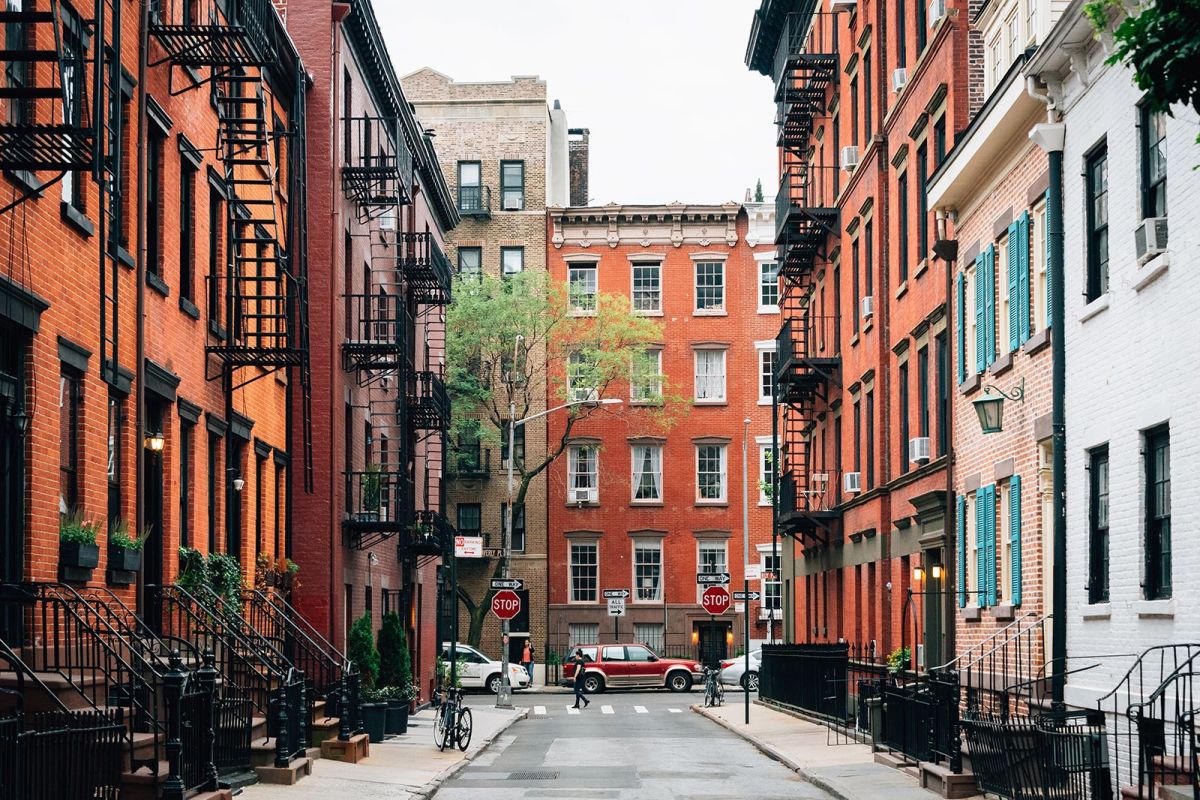
West Village
new york, united states
One of New York's safest and most welcoming neighborhoods—cobblestone streets, LGBTQ+ history, and world-class dining make it ideal for solo women—just be prepared for Manhattan-level prices.
Stats
Key Safety Tips
West Village stands out as one of the most welcoming corners of New York City for women traveling alone. This storied neighborhood—bounded by the Hudson River to the west, Sixth Avenue to the east, 14th Street to the north, and Houston Street to the south—carries a legacy of radical inclusion that goes back more than a century. Home to the Stonewall Inn, birthplace of the modern LGBTQ+ rights movement, the West Village has long championed the idea that everyone belongs, and that ethos filters into every block and every bar. Many women report feeling genuinely at ease here in a way that is rare in a city as intense as New York. The streets are narrower and quieter than Midtown, the brownstones are human-scaled, and the cobblestones slow everyone—including the energy—down a beat. The neighborhood consistently appears on lists of the safest in NYC, and Greenwich Village as a whole (West Village included) benefits from constant foot traffic and active community policing. There are no dark industrial stretches, no deserted corridors; even late on a weeknight, Hudson Street and Christopher Street stay populated. For a solo female traveler, that ambient human presence is one of the most reassuring safety nets there is.
West Village is a walker's neighborhood. Experience shows that once you arrive, you will almost certainly want to do nothing but wander—down Grove Street past its lovingly maintained Federal and Greek Revival townhouses, along West 10th Street with its lantern-lit stoops, and through the crooked grid that makes the neighborhood notoriously hard to navigate but endlessly rewarding to explore. The streets here do not follow Manhattan's standard perpendicular plan; instead they fan out from old farm lanes and cattle paths, which means surprises at every turn. Perry Street, Carmine Street, and Bleecker Street are among the most picturesque stretches to walk during daylight hours. Washington Square Park, on the eastern edge of the neighborhood, is a beloved daytime gathering spot—musicians, students, chess players, and dogs. A note for after dark: the park itself can feel less comfortable late at night, particularly around the fountain, and many women find it easier to enter it from its northern side where foot traffic is highest. Everywhere else in the neighborhood, evening walks feel genuinely safe; the presence of restaurants spilling light onto the sidewalks and locals out with their dogs creates a naturally protective atmosphere.
West Village runs on its own relaxed clock. Most independent cafes open between 7:00 am and 8:00 am on weekdays and may open slightly later on weekends—often 9:00 am or 10:00 am. Brunch is an institution here, with restaurants typically running brunch service from 10:00 am or 11:00 am through 3:00 pm on Saturdays and Sundays. Dinner service at the neighborhood's many sought-after restaurants usually begins around 5:30 pm or 6:00 pm. Reservations are strongly recommended—and often essential—for dinner at popular spots like Don Angie on Hudson Street or Semma on Greenwich Avenue; walk-in seats at the bar are sometimes available but not guaranteed. Bars typically open their doors in the afternoon around 4:00 pm or 5:00 pm and are legally permitted to stay open until 4:00 am under New York State law, though many close earlier. Boutique shops and independent bookstores on Bleecker and Christopher Streets generally operate from 11:00 am to 8:00 pm. Sunday hours vary considerably—it is wise to check ahead for specific venues.
The dining scene in West Village is extraordinary, and it rewards solo travelers who are comfortable sitting at a bar. At Semma (60 Greenwich Ave), James Beard Award-winning chef Vijay Kumar presents Tamil Nadu-rooted South Indian cooking unlike anything else in the city—the gunpowder dosa alone is worth the trip. Fedora (239 W 4th St), a dimly lit European-influenced bistro, recently reopened to much fanfare and is ideal for a solo dinner at the bar; the atmosphere is warm without being isolating. Tea and Sympathy (108 Greenwich Ave) is a legendary British cafe—scones, cottage pie, strong tea—that has been feeding the neighborhood since 1990 and remains one of the friendliest rooms in town for a solo visitor. For something more casual, Fairfax (234 W 4th St) is a neighborhood gastropub from restaurateur Gabe Stulman with plush furniture and a convivial afternoon crowd. The neighborhood also has outstanding wine-bar dining at Libertine (684 Greenwich St), where there is no printed menu—just a chalkboard—and the French bistro fare is deeply comforting. At Sappe (240 W 14th St), Central Thai cooking and Bangkok-inspired ambiance make it a good evening destination. Prices in the West Village span from affordable to Michelin-starred, so you can eat well here whatever your budget.
Haggling is not practiced in New York City. Prices at restaurants, cafes, shops, and markets are fixed, and negotiating them would be considered unusual. The one place where some flexibility exists is at weekend street markets and outdoor flea markets, where vendors occasionally accept lower offers on higher-priced vintage or antique items—but even there it is uncommon and should be approached casually rather than aggressively. In West Village specifically, with its boutique retail and independent galleries, all prices are as marked. Tipping, however, is firmly expected: 18-20% at restaurants and cafes with table service, and $1-2 per drink at bars. Not tipping is noticed and considered impolite. Some restaurants now include a suggested gratuity on the check; you are free to adjust this, but leaving nothing without cause is frowned upon.
The nearest full-service hospital with a 24/7 emergency department is Northwell Health's Greenwich Village Hospital, located at 26 W 11th Street—a few blocks from the heart of the neighborhood. For non-emergency care and urgent needs, CityMD West Village Urgent Care at 331 6th Avenue (at West 4th Street) is convenient and open seven days a week, typically from 8:00 am to 8:00 pm on weekdays. There are also several primary care practices and specialized clinics along Hudson and Greenwich Streets. For true emergencies requiring a major trauma center, NYU Langone Medical Center and NYP/Weill Cornell Medical Center are accessible via subway or taxi within 20-30 minutes. It is worth noting that healthcare in the United States is expensive for uninsured visitors—travel insurance with medical coverage is strongly recommended before arriving. Pharmacies (including Duane Reade and CVS) are available within the neighborhood for over-the-counter needs.
Tap water in New York City is excellent and entirely safe to drink. In fact, NYC municipal water is widely considered among the best in any major American city—filtered through the Catskill and Delaware watershed systems and regularly tested. You will find water fountains in Washington Square Park and along the Hudson River Park greenway to the west of the neighborhood. Bring a reusable bottle; refilling it is easy and free. Restaurants will bring a glass of tap water without charge if asked, and most serve it automatically. Bottled water is available at convenience stores and bodegas throughout the neighborhood, but there is no need to purchase it for safety reasons—it is purely a convenience choice. Many of the neighborhood's independent cafes also offer filtered water on the counter as a self-serve option.
New York State sets the legal drinking age at 21, and this is strictly enforced at bars throughout West Village. Carry a passport or government-issued ID—you may be asked. In the West Village, bars are licensed to serve alcohol until 4:00 am; this is later than most cities and means the neighborhood's nightlife can run very long. Drinking in public spaces—on streets, in parks, or on stoops—is technically illegal under NYC administrative code and can result in a summons, though enforcement varies. The West Village has an active bar and restaurant scene, and the neighborhood's LGBTQ+ bars in particular (Cubbyhole at 281 W 12th St, Stonewall Inn at 53 Christopher St, Henrietta Hudson's at 438 Hudson St) are welcoming spaces where inclusive norms prevail. Liquor stores in New York cannot sell wine or spirits on Sundays before noon. Beer is available at bodegas and delis throughout the week.
New Yorkers have a reputation for being brusque, and in some parts of the city that is fair. West Village is notably different—the neighborhood has a tight-knit, village-like feel (hence the name), and residents often acknowledge each other on the street. A simple nod or hello is perfectly appropriate. Service staff at cafes and restaurants tend to be warm and conversational; this is a neighborhood where regulars are known by name and newcomers are made to feel welcome. That said, New Yorkers do not linger over introductions the way people in some cultures do—a direct, friendly manner works best. When meeting someone for the first time in a social setting, a handshake is the norm for professional contexts; in casual or LGBTQ+ social settings a hug or cheek kiss is common between friends. There are no special gender-based greeting customs—treat everyone with the same directness and warmth you would want returned.
New York City operates on a punctual-leaning culture, particularly in professional contexts and for restaurant reservations. If you have made a reservation—and in West Village's competitive dining scene you will almost certainly need one—arriving within 10 minutes of your booking time is expected. Many restaurants will give away the table after 15 minutes if they have not heard from you. For social events and casual meetups, a grace period of 10-15 minutes is generally accepted. Being significantly late without messaging ahead is considered disrespectful in most New York contexts. Transit delays are common and are a widely accepted excuse—the subway system, while extensive, has frequent disruptions—but it is still courteous to let people know if you are running behind. The 1 train at Christopher Street is notorious for gaps during off-peak hours.
West Village is one of the best neighborhoods in New York for meeting people as a solo woman. The LGBTQ+ community here is visible, organized, and historically rooted in the neighborhood's identity; the area around Christopher Street and Stonewall Inn has been a gathering point for decades. Cubbyhole (281 W 12th St) is self-described as a welcoming lesbian bar and is genuinely that—a small, eclectic space where strangers become friends quickly, especially on weekend nights. Henrietta Hudson's (438 Hudson St) is another lesbian and queer women's bar with live music and a social atmosphere. Even if you are not part of the LGBTQ+ community, these spaces are welcoming to allies. For broader social connection, Washington Square Park on a weekend afternoon offers the classic New York experience of strangers in conversation around a chess board or guitar circle. Many cafes in the neighborhood have communal tables that invite conversation. Free walking tours of Greenwich Village leave from Washington Square Park and are an excellent way to meet fellow travelers while learning neighborhood history.