Tribeca
new york, united states
Tribeca is Manhattan's most serene upscale enclave — cobblestone streets, world-class dining, and genuinely low harassment rates make it a dream for solo female travelers, though budget-friendly accommodation doesn't exist here.
Stats
Key Safety Tips
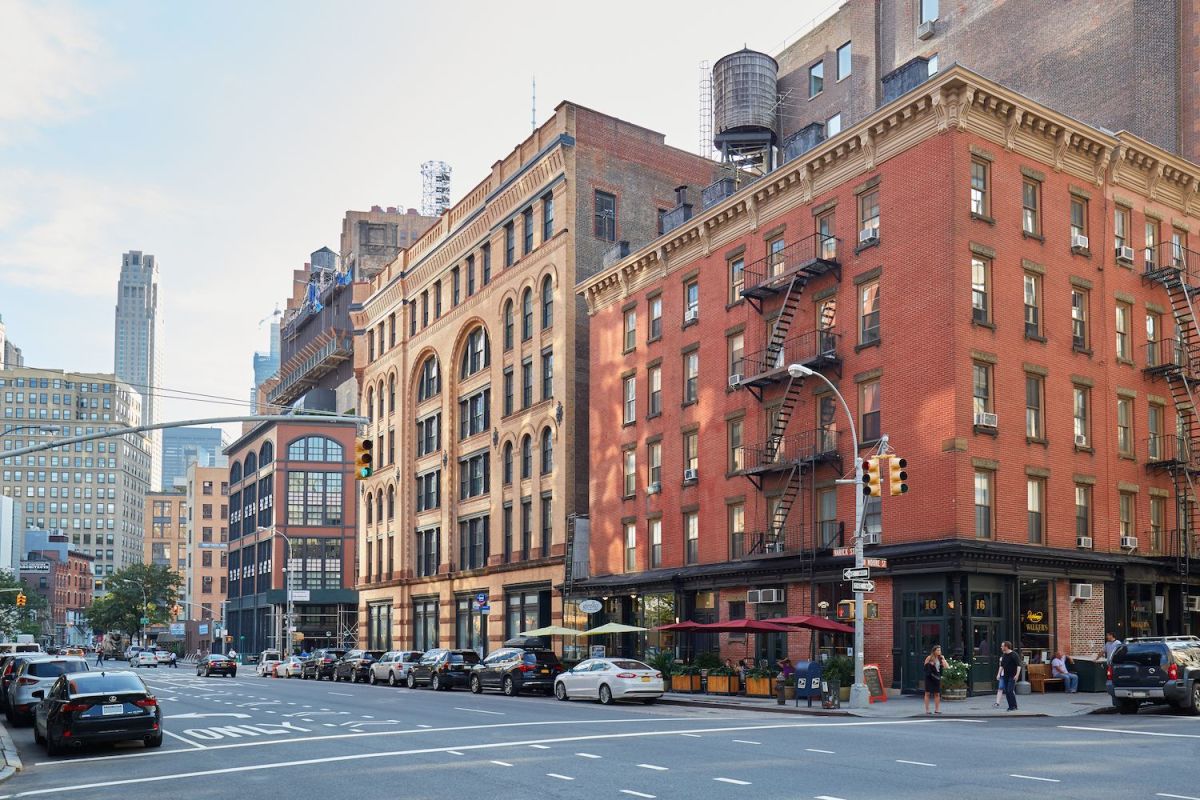
Tribeca — the Triangle Below Canal Street — is one of Manhattan's most celebrated neighborhoods, and for solo female travelers it represents something genuinely rare: a downtown New York experience that feels both vibrant and genuinely calm. Bounded by Canal Street to the north, Chambers Street to the south, the Hudson River to the west, and Broadway to the east, this enclave of cobblestone streets and hulking cast-iron lofts has shed its industrial past to become a haven of understated luxury and creative culture.
What makes Tribeca so compelling for women traveling alone is the particular quality of its streets. Unlike Midtown's relentless bustle or the East Village's frenetic energy, Tribeca moves at a measured pace. The blocks are wide, the foot traffic is sparse compared to other Manhattan neighborhoods, and the residential density — roughly 19,700 people with a median age of 41 — means that the community skews toward settled, professional residents rather than transient crowds. Violent crime here is strikingly low. The neighborhood has seen crime drop by nearly 60% since 2000, and personal-safety incidents — robbery, assault, harassment — remain well below the city average.
This seasoned traveler has walked these streets at all hours and found Tribeca to be one of the most welcoming neighborhoods in New York for a woman alone. The presence of families, gallery-goers, and well-heeled diners on the streets, even late into the evening, creates a social environment that feels protective rather than threatening. The neighborhood's prestige also brings a certain attentiveness from local businesses — you are expected and welcome.
The main caveat: Tribeca is expensive. Budget accommodations are essentially nonexistent within the neighborhood boundaries. If you're watching spending, staying nearby in the Financial District or SoHo and making day and evening trips here is a reasonable approach.
Walking is the defining pleasure of Tribeca, and with a Walk Score of 99 the neighborhood earns its "Walker's Paradise" designation honestly. The cobblestone streets along stretches of Harrison, Jay, and Staple Streets feel almost cinematic — original 19th-century block paving, flanked by converted warehouse façades and the occasional wrought-iron fire escape. It is architecture you absorb on foot, and the sparse daytime foot traffic means you rarely feel jostled or crowded.
During the day, the streets are notably calm for Manhattan. Many blocks are designated historic landmark districts, and the absence of through-traffic on some stretches gives them an almost village-like quietude. The southwest area — toward Hudson River Park and around Duane Park — is considered the safest zone within Tribeca, and this is where many solo female travelers feel most comfortable simply wandering.
At night, the streets thin out considerably, which is both a plus and something to note. The low pedestrian density that feels peaceful by day can feel isolated after 11 pm on some residential side streets. The well-lit main arteries — Hudson Street, Greenwich Street, West Broadway — remain well-frequented throughout the evening, driven by the neighborhood's celebrated restaurant scene. Staying on these corridors after dark is the right instinct.
Property crime — opportunistic theft, bicycle theft — is the more realistic concern in Tribeca rather than personal-safety incidents. Keep valuables secured, particularly in busy restaurant entry areas. The southwest portion near the river is consistently cited as the safest area; the southeast corner near Broadway can see slightly higher incident rates due to commercial traffic.
Tribeca operates on its own relaxed downtown schedule. Many independent cafés and boutiques open between 9 am and 10 am rather than the early-morning times common in Midtown. Restaurants typically begin lunch service around 11:30 am and remain open through late evening, with many kitchens running until midnight or beyond. The Odeon, one of the neighborhood's landmark bistros on West Broadway, is a particular standout — its kitchen runs notably late, making it a reliable option after an evening at a gallery or event.
Duane Park, the neighborhood's beloved pocket park, is accessible throughout the day and early evening. Hudson River Park, stretching along the western edge, is open from dawn well into the evening during warmer months. Boutique shops and art galleries typically keep hours of 11 am to 7 pm, Tuesday through Sunday, with Monday closures common among smaller galleries.
Laughing Man Coffee, the Hugh Jackman-founded café near Duane Park on Duane Street, opens around 7 am on weekdays — one of the earlier starts in the neighborhood — making it a reliable first-coffee stop before the rest of the neighborhood stirs. For groceries and essentials, there is a Target on Greenwich Street that keeps standard retail hours, roughly 8 am to 10 pm daily.
Urgent care facilities in Tribeca — CityMD on Chambers Street and Sollis Health at 255 Greenwich Street — operate extended hours including evenings and weekends, which is useful context for any traveler who may need medical care on short notice.
Tribeca's dining scene is one of the finest and most consistent in New York City, with a density of excellent restaurants that reward the solo diner. The neighborhood's culinary identity leans toward polished, ingredient-driven cooking in relaxed settings — and the single-diner experience is treated with the same care as a table for four.
Bubby's on Hudson Street is a perennial neighborhood institution: a comfort-food American diner with excellent brunch, warm service, and the kind of unpretentious atmosphere where sitting alone with a book feels entirely natural. The Odeon on West Broadway is another staple — a classic bistro with a French-inflected American menu, beloved for its late-night hours and understated glamour. Square Diner on Leonard Street is a genuine vintage railroad-car diner, compact and welcoming, perfect for a solo breakfast.
For more upscale dining, L'Abeille on Chambers Street is one of the neighborhood's most celebrated recent additions — a French-Japanese tasting menu that requires booking ahead, but makes for an extraordinary solo splurge. Frenchette on West Broadway brings a sophisticated take on French brasserie cooking and has a bar area that is well-suited to solo diners.
Laughing Man Coffee on Duane Street serves excellent espresso drinks and light food throughout the day — it has the warm, community-oriented feel of an independent café despite its celebrity founding story. For groceries and self-catering, the TriBeCa Whole Foods on Greenwich Street is well-stocked and convenient.
There is no haggling culture in Tribeca. Prices at restaurants, boutiques, and galleries are fixed, and attempting to negotiate would be considered unusual and unwelcome. This is true across New York City generally, and Tribeca's upscale commercial character makes it particularly so.
Tips at restaurants run 20% as a general standard — 18% is acceptable, and 22-25% is increasingly common at higher-end establishments. Some restaurants have moved to a no-tipping service-included model; menus and receipts will indicate this clearly when it applies. Credit cards are accepted nearly universally; it is entirely normal to pay by card even for a single coffee.
The exception to fixed pricing is informal markets and street vendors, which do occasionally appear in the broader downtown area, particularly around Canal Street to the north of Tribeca. These do involve some negotiation, though the context makes clear when it's appropriate. Within Tribeca's established retail and dining venues, consider all prices posted as final.
Art galleries in Tribeca do not have posted prices for works — pricing in the art world is by inquiry and there is some flexibility, but this operates as a professional negotiation rather than casual haggling and is only relevant if you are seriously considering a purchase.
Tribeca is well-served by urgent care options, and proximity to major hospitals makes medical access reassuringly straightforward. For walk-in urgent care, the best options within the neighborhood are CityMD Urgent Care at 350 Chambers Street — which offers extended hours including evenings and weekends, with most visits completed within 30 minutes — and Sollis Health at 255 Greenwich Street, Fifth Floor, which offers a more comprehensive concierge urgent care experience including on-site imaging and labs. Sollis can be reached at 646-687-7600.
+MEDRITE Urgent Care also operates in the neighborhood, providing fast-access medical services for non-emergency needs. These facilities handle everything from minor injuries and infections to travel health needs including prescription refills and vaccinations.
For emergency care, the nearest hospital emergency departments are at NYU Langone Health — Tisch Hospital (relatively close via the 1 train to 14th St) and NY-Presbyterian/Lower Manhattan Hospital on William Street in the Financial District, approximately a 10-minute cab ride or subway trip from central Tribeca. In any emergency, calling 911 is the standard approach; NYPD and FDNY response times in Lower Manhattan are fast.
Travelers with specific health needs should carry documentation of any regular medications, as US pharmacies require a US-issued prescription for controlled substances. Duane Reade and CVS both have locations in or near Tribeca for over-the-counter needs.
New York City tap water is excellent — widely regarded as among the best municipal tap water in the United States, and perfectly safe to drink directly from the tap. Tribeca's water, like all of Manhattan's, comes from the Catskill and Delaware watershed systems upstate, filtered through one of the largest unfiltered water supplies in the world. It is regularly tested and awarded high marks for safety and taste.
Carry a reusable water bottle throughout your stay — there is no need to purchase bottled water, and refill stations are available throughout Hudson River Park and in many cafés and public buildings. This is both economical and environmentally sensible. Many restaurants bring tap water to the table automatically; if they do not, simply ask for "tap water" and it will be provided without charge.
Sparkling water is widely available and popular at Tribeca's restaurants and cafés. Asking for "still" or "sparkling" water is standard. Some upscale restaurants charge for premium bottled sparkling water — if you do not want to pay, ask specifically for "tap water" and this will be provided at no cost.
Alcohol is legal in New York State and widely available in Tribeca. The legal drinking age is 21, and bars and restaurants are required to verify identification for anyone who appears under 30 or so — carrying a passport or official photo ID is recommended if you're on the younger side of 30. Alcohol can be purchased from bars, restaurants, and licensed liquor stores.
Liquor stores operate under New York State licensing and are generally open from 9 am to midnight, depending on the establishment. Grocery stores and convenience stores in NYC can sell beer and wine; spirits must be purchased from a licensed liquor store. There is a Total Wine & More accessible from the neighborhood, and several wine and spirits shops operate within Tribeca.
Open containers of alcohol on public streets are illegal in New York City, and this is enforced. Drinking is confined to licensed premises — bars, restaurants, and event venues. Tribeca's bar scene skews sophisticated rather than rowdy: the Brandy Library on North Moore Street, with its floor-to-ceiling spirit library and quiet, elegant atmosphere, sets the tone for nightlife here. Nancy Whiskey Pub on Lispenard Street is a beloved old-school dive bar — genuinely unpretentious and welcoming.
Brunch culture in New York means bottomless mimosa and Bloody Mary deals are widely available on weekends; Bubby's on Hudson Street is particularly popular for this. Pace yourself — these deals can accelerate faster than expected.
New Yorkers are famously direct and efficient in their interactions, and Tribeca is no exception. A brief, friendly acknowledgment is entirely appropriate in shops, restaurants, and cafés; extended pleasantries are neither expected nor typical. "Hi" or "Hey" works universally — the formal "Good morning/afternoon" register is unusual except in very upscale hotel contexts.
Service staff are professional and attentive. In restaurants, making brief eye contact and a slight nod or wave is the standard way to summon a server — waving dramatically or calling out is considered poor form. At coffee shops, ordering at the counter is the norm; have your order ready when you reach the front, as queues move quickly.
On the street, Tribeca residents tend to be self-contained but not unfriendly. If you need directions, asking someone who is not visibly rushed will generally yield a helpful response. The neighborhood's relative calm compared to Midtown means people are somewhat more willing to pause and assist. Many Tribeca residents have dogs — dog parks and Hudson River Park are genuinely social spaces where conversation happens naturally.
At gallery openings, which are common in the neighborhood particularly on Thursday and Friday evenings, conversation flows easily and solo attendance is entirely normal. These events are typically free to attend and represent one of the better ways to meet Tribeca's creative community.
New York City runs on a general culture of reasonable punctuality rather than the extreme precision expected in some European cities. For restaurant reservations — essential at Tribeca's more popular spots — arriving within 10-15 minutes of your reservation time is expected. Many restaurants will hold your table for 15 minutes past the booking time; after that, they may give it away during busy service. If you're running late, a quick call to the restaurant is appreciated and will usually result in accommodation.
For social engagements, 5-10 minutes late is generally acceptable — arriving exactly on time or slightly early is fine and not considered awkward. Very late arrivals (30+ minutes) for dinner plans would warrant a message to whoever you're meeting.
Cultural events — the Tribeca Film Festival (held in April-May), gallery openings, film screenings, and ticketed performances — operate on posted start times, and arriving at or slightly before the stated time ensures you get your seat. Free public events in Hudson River Park tend to be casual about timing.
The subway is the great equalizer of punctuality in New York: delays do happen, and anyone who lives here understands this. Having Google Maps or Citymapper open and building in a few minutes of buffer is simply the New York way.
Tribeca's demographic — affluent, professional, and relatively insular — makes spontaneous social connection somewhat less effortless than in, say, the East Village or Brooklyn neighborhoods. But it is far from impossible, and the neighborhood's cultural life provides natural gathering points.
Gallery openings are genuinely the best entry point into Tribeca's creative world. The neighborhood has a long history as an artists' community, and while the original artists have largely been priced out, galleries remain active and welcoming. Thursday and Friday evenings are prime gallery-opening nights — check local listings on New York Magazine's Vulture or Time Out New York for current events.
Hudson River Park along the western edge of Tribeca is an excellent daytime social environment — the Pier 25 area in particular has volleyball courts, mini-golf, and a playground that draws a mixed community of residents. The park's running and cycling paths are busy in the mornings and evenings.
The Tribeca Film Festival (typically late April through early May) transforms the neighborhood into a genuinely social, festival atmosphere — film screenings, panel discussions, and public events create easy conversation starters and a more open social environment than usual. The festival draws a mix of industry insiders and film enthusiasts, and many events are accessible to the general public.
Laughing Man Coffee is consistently cited as one of the more community-oriented spots in the neighborhood; working there for a few hours often yields conversation with regulars.