Is Seattle Safe for Solo Female Travelers?
united states
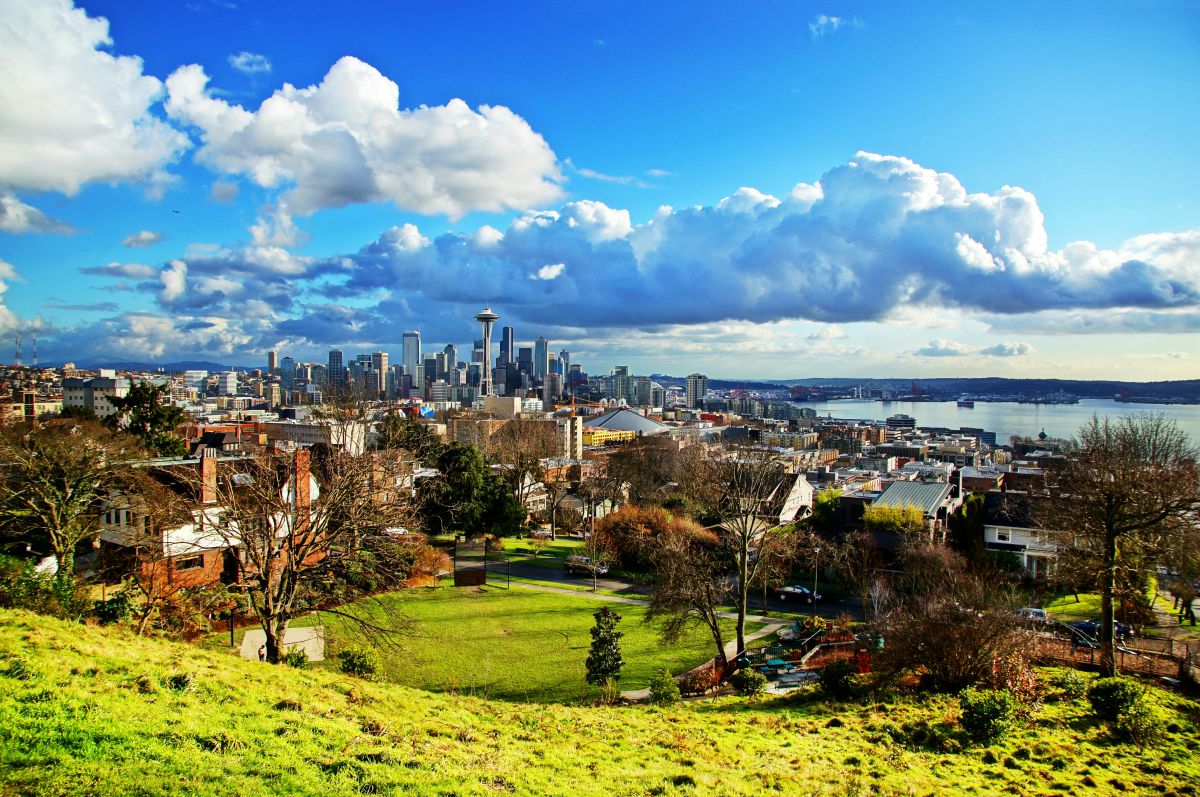
Progressive, walkable, and surrounded by nature — Seattle is where independence is a civic virtue and solo women blend right in.
Stats
Key Safety Tips
Why Seattle is perfect for solo female travelers
Key Stat: Seattle ranks as the most walkable city in the United States as of 2025, with a Walk Score of 74 and a robust light rail system connecting neighborhoods safely.
Seattle is one of the most natural fits for solo female travelers in the entire country. The city's progressive, independent-minded culture means a woman exploring alone draws zero extra attention — in fact, independence is practically a civic virtue here. The famous "Seattle Freeze," where locals are polite but reserved with strangers, may sound daunting at first, but many solo women find it liberating. Nobody is going to insert themselves into your space uninvited, and when you do initiate conversation, Seattleites are warm, thoughtful, and genuinely helpful.
The city's compact, walkable core makes it easy to fill days without ever needing a car. Pike Place Market, the Space Needle, the Museum of Pop Culture, and the waterfront are all within walking distance of each other, and the Link Light Rail connects downtown to Capitol Hill, the University District, and Sea-Tac Airport for just $3 per ride. Seattle's coffee culture provides a built-in social infrastructure for solo travelers — hundreds of independent cafes serve as comfortable workspaces and people-watching perches where a woman sitting alone is the norm, not the exception.
What truly sets Seattle apart is its relationship with nature. Flanked by Puget Sound to the west and the Cascade Range to the east, with Mount Rainier visible on clear days, the city lets you go from a world-class art museum to a waterfront kayak launch to a forest hike within a single afternoon. Over 100 women-owned restaurants, queer-friendly venues, and an active meetup scene mean opportunities for connection are everywhere — but always on your own terms.
Quick Facts
- Safety Rating: 3.8/5
- Budget: $99-$242 per day (budget to mid-range)
- Emergency Number: 911
- Timezone: Pacific Standard Time (UTC-8)
- Language: English
- Best Months: June-September
- Population: 816,600 (as of 2025)
- Walkability: 4.7/5
Walking around
Key Stat: Seattle crime dropped 9.6% citywide in early 2025 compared to the same period in 2024, with violent crime specifically down approximately 20%.
Seattle's core neighborhoods offer excellent walkability for solo female travelers, with flat-to-moderate terrain, well-maintained sidewalks, and strong pedestrian infrastructure throughout the tourist areas. The safest neighborhoods for walking include Queen Anne, Ballard, Fremont, Green Lake, West Seattle, and Capitol Hill's commercial strips, all of which maintain steady foot traffic and good lighting throughout the day and into the evening.
Downtown Seattle and the Pike Place Market area are well-patrolled and busy during daytime hours. Queen Anne, with a violent crime rate under 2.5 per 1,000 residents as of 2025, offers a blend of safety, cafes, and walkable streets. Ballard stands out for well-lit streets and dedicated pedestrian zones. Green Lake's 2.8-mile loop trail is popular with walkers and joggers throughout daylight hours.
Exercise increased caution after dark: Pioneer Square sees increased street-level crime at night, parts of the International District require awareness, and the stretch of 3rd Avenue between Pine and Pike Streets has a reputation for open drug use. Parks and waterfront trails are well-populated during daylight but should be avoided alone after dark.
The Seattle Police Department recorded approximately 22% fewer total crimes in 2025 compared to 2024. Property crime remains the biggest challenge — the city ranks third nationally at 5,007.6 incidents per 100,000 residents — so keep valuables secure and never leave anything visible in parked cars. For emergencies, dial 911.
Opening Hours
Key Stat: Seattle grocery chains like QFC and Safeway typically operate from 6:00 AM to midnight, with some locations open 24 hours.
Standard retail shops in Seattle operate Monday through Saturday from 10:00 AM to 7:00 PM or 8:00 PM, with Sunday hours typically shortened to 11:00 AM to 6:00 PM. Shopping areas like University Village and Pacific Place maintain hours until 8:00 PM or 9:00 PM on weekdays. Pike Place Market's main arcade opens daily at 9:00 AM and most vendors close by 6:00 PM, with some restaurants staying open later.
Grocery stores offer more flexible schedules. QFC, Safeway, and Fred Meyer generally open between 5:00 AM and 6:00 AM and close at midnight. Whole Foods operates 8:00 AM to 10:00 PM, Trader Joe's 8:00 AM to 9:00 PM. PCC Community Markets, Seattle's local co-op chain, opens at 6:00 AM or 7:00 AM and closes at 10:00 PM or 11:00 PM, with a new downtown store at 4th and Union as of 2025.
Tourist attractions maintain varied schedules: the Space Needle is open daily 9:00 AM to 11:00 PM in summer, 10:00 AM to 9:00 PM in winter. MoPOP operates 10:00 AM to 5:00 PM with extended summer hours. The Seattle Art Museum is open Wednesday through Sunday, 10:00 AM to 5:00 PM (Thursdays until 9:00 PM). Pharmacies including Walgreens and Rite Aid are widespread, open until 9:00 PM or 10:00 PM. Most businesses observe shortened hours on Thanksgiving, Christmas, and New Year's Day.
Restaurants
Key Stat: Seattle has over 100 women-owned restaurants as of 2025, and the city's strong bar-seating culture makes solo dining comfortable at nearly every price point.
Seattle's dining culture is exceptionally welcoming for solo travelers, driven by a deep tradition of counter seating, open kitchens, and casual bar dining. The food scene spans from Michelin-recognized seafood to Pike Place Market stalls, and solo diners are welcomed everywhere.
The Walrus and the Carpenter in Ballard has a walk-in bar with oysters and crudo, and waits are shorter for solo guests. Manolin in Fremont features a U-shaped marble bar for watching cooks prepare ceviche. Bar del Corso in Beacon Hill offers charred Neapolitan pizza at bar seating. Serious Pie downtown has communal tables ideal for solo diners. For brunch, Tilikum Place Cafe near Seattle Center serves Dutch baby pancakes, while Oddfellows Cafe on Capitol Hill and Elliott Bay Book Company pair food with comfortable solo atmospheres.
Standard meal times: breakfast 7:00 AM to 11:00 AM, lunch 11:30 AM to 2:30 PM, dinner 5:00 PM to 10:00 PM weekdays (11:00 PM weekends). Weekend brunch runs 9:00 AM to 2:00 PM. Tipping is standard at 18-20% for sit-down service.
Haggling
Key Stat: Fixed pricing is the universal norm in Seattle retail, with limited negotiation appropriate only at weekend flea markets and antique fairs.
Haggling is not practiced in Seattle's retail environment. Fixed prices are the absolute norm in all department stores, boutiques, chain retailers, restaurants, grocery stores, and coffee shops. Attempting to negotiate prices in these settings would be considered rude and culturally inappropriate.
The few exceptions where gentle negotiation is acceptable include the Fremont Sunday Market, featuring vintage goods, crafts, and antiques — vendors prefer cash, and 10-15% flexibility on higher-priced items is sometimes possible. The Georgetown Flea Market, held monthly, similarly allows light negotiation on vintage items. Outside of these specific markets, prices are firm, even at thrift shops in Capitol Hill and Ballard.
Payment preferences lean heavily toward cards, with many Seattle establishments preferring or requiring electronic payments. Apple Pay, Google Pay, and tap-to-pay are widely accepted. Seattle has a higher rate of cashless businesses than most US cities. For market shopping, bring cash in small bills.
Hospitals
Key Stat: Harborview Medical Center, located at 325 9th Avenue, is the only Level I adult and pediatric trauma center in the four-state WWAMI region (Washington, Wyoming, Alaska, Montana, Idaho), serving as Seattle's premier emergency facility.
Emergency services operate through the 911 system, connecting callers immediately to police, fire, or ambulance services. Seattle's emergency response infrastructure is excellent, with response times in central neighborhoods typically ranging from 5 to 10 minutes.
Major hospitals with 24/7 emergency departments include Harborview Medical Center at 325 9th Avenue on First Hill, the region's premier trauma center. UW Medical Center - Montlake at 1959 NE Pacific Street is ranked among Washington's best hospitals. Swedish First Hill at 700 Minor Avenue, Swedish Cherry Hill at 540 16th Avenue, and Virginia Mason Medical Center at 1100 9th Avenue round out the First Hill medical corridor — some of the Pacific Northwest's best healthcare within a few walkable blocks.
For non-emergency needs, ZoomCare operates over 20 urgent care clinics across Seattle including Downtown (517 Union Street), Capitol Hill (531 Broadway East), and Queen Anne (1909 Queen Anne Avenue N). Visits cost $160-$250 without insurance. Emergency room visits run $1,500-$4,000 for basic treatment, so urgent care is strongly recommended for non-life-threatening issues. Pharmacies including Walgreens and Bartell Drugs are abundant throughout the city.
Drinking Water
Key Stat: Seattle's tap water is sourced from protected mountain watersheds in the Cedar River and Tolt River basins, and the city's utility lab tests over 20,000 water samples annually, making it among the cleanest municipal water in the United States.
Seattle's tap water is excellent and perfectly safe to drink straight from the faucet. The water comes from two pristine sources: the Cedar River Watershed and the South Fork Tolt River Watershed, both located in the Cascade foothills east of the city. These watersheds are closed to public access, which helps maintain exceptional water purity from the source.
The water consistently meets or exceeds all federal EPA and state Department of Health standards. Seattle Public Utilities operates the largest state-accredited water utility laboratory in Washington, testing over 20,000 samples per year for more than 200 contaminants. There is no detectable lead in the source water, though older buildings with legacy plumbing may have trace amounts from pipes.
Tap water is routinely served at restaurants and is the default at most establishments. Bottled water is available for $1.50-$3.00 but there is no safety reason to buy it. The water has a clean, slightly sweet taste that visitors frequently comment on favorably. Environmentally conscious Seattleites overwhelmingly prefer reusable bottles filled from the tap.
Alcohol Laws
Key Stat: Washington state law permits alcohol service from 6:00 AM to 2:00 AM daily, and Seattle bars universally observe the 2:00 AM last call.
The legal drinking age in Washington state is strictly 21 years old. Valid photo identification — a passport, driver's license, or state ID — is required for all alcohol purchases and bar entry, and enforcement is consistent. Even travelers who appear to be in their 30s or 40s should carry ID, as many establishments check regardless of apparent age.
Bars, restaurants, and clubs may serve alcoholic beverages between 6:00 AM and 2:00 AM any day of the week under Washington state law. Most Seattle bars begin winding down service around 1:30 AM, with last call typically announced at 1:45 AM. The city has periodically explored extending bar hours past 2:00 AM, but as of 2026, the 2:00 AM cutoff remains firmly in place.
Public consumption of alcohol is prohibited and can result in citations — this includes streets, parks, and public transportation. Off-premises alcohol sales at grocery and convenience stores follow the same 6:00 AM to 2:00 AM window.
Seattle's craft beer and cocktail scene is one of the strongest in the country, with Capitol Hill, Ballard, and Fremont packed with breweries, taprooms, and craft cocktail bars. The culture is relaxed and inclusive — solo women at bars are common and unremarkable. Cannabis is legal for adults 21 and over in Washington state, with licensed dispensaries found throughout the city.
Greetings
Key Stat: Seattle is famous for the "Seattle Freeze," a cultural phenomenon where locals are friendly but reserved with newcomers, meaning solo women can expect polite but non-intrusive interactions.
Seattle's greeting culture is casual, low-contact, and refreshingly low-pressure. A simple "hi" or "hey" with a brief smile is the standard greeting in most situations. Handshakes are reserved for professional introductions. Hugs are rare between acquaintances and virtually nonexistent between strangers. This reserve can initially feel cold to visitors from more effusive cultures, but most solo female travelers come to appreciate it — nobody is going to invade your personal space.
The "Seattle Freeze" is a well-known local phenomenon where residents are perfectly pleasant on the surface but slow to form deeper connections. For solo travelers on a short visit, this translates to consistently courteous service, willingness to give directions or restaurant recommendations, and a general attitude of respectful non-interference. Baristas, bartenders, and shop owners tend to be the warmest points of social contact, and Seattle's independent coffee shops are often the easiest places to strike up genuine conversation.
Gender-specific greeting protocols are nonexistent — women can expect identical treatment regardless of whom they are speaking with. The city's tech-influenced culture means social interactions tend to be efficient and direct. Seattleites appreciate getting to the point and generally dislike performative small talk.
Punctuality
Key Stat: Seattle's professional culture values punctuality within a 5-minute window, while social engagements allow a flexible 10-15 minute grace period.
Business and professional interactions in Seattle follow standard American expectations — arriving on time or up to 5 minutes early is expected for meetings, appointments, and reservations. Seattle's large tech industry has reinforced a culture of efficiency where lateness is noticed and mildly frowned upon, though reactions are less harsh than in cities like New York.
Social engagements are more relaxed — arriving 10-15 minutes after the stated time is acceptable and even expected for casual gatherings. Restaurant reservations are held for 15 minutes before being released.
Seattle's unpredictable traffic and frequent bridge openings (the city has over 25 bridges, several of which are drawbridges) provide universally understood excuses for minor lateness. Public transit schedules are generally reliable, with buses and Link Light Rail running within a few minutes of posted times.
Meeting People
Key Stat: Seattle has over 5,000 active Meetup groups as of 2025, with hiking, travel, and social networking groups being the most popular categories for solo travelers.
Seattle offers an excellent social infrastructure for solo female travelers looking to connect. The city's Meetup scene is one of the most active in the country, driven partly by the tech industry's transplant population — many residents moved here alone and actively sought social connections. The Seattle Travel Buddies and Activities Group hosts regular brunches, happy hours, and hikes specifically designed for people without a built-in friend group, with trips typically composed of 90% solo travelers.
The outdoor culture provides the most natural avenue for meeting people. Hiking groups are enormously popular, with organized outings to nearby trails in the Cascades, Olympic Peninsula, and Mount Rainier National Park running every weekend year-round. The Mountaineers, a century-old outdoor recreation club, offers courses and group outings in hiking, climbing, kayaking, and skiing that attract a friendly, inclusive crowd.
Seattle's neighborhood bars and coffee shops serve as informal community hubs. Capitol Hill's bar scene along Pike and Pine Streets is welcoming and diverse, with Rhein Haus (a German beer hall with indoor bocce courts) and Linda's Tavern creating easy environments for conversation. Fremont's quirky vibe, centered around the Sunday Market and pubs like The George and Dragon, fosters casual interactions. Seattle Social Club hosts structured events for ages 21-40 including speed dating, board game nights, and group dinners.
Practical Considerations
Key Stat: Seattle receives only 37 inches of rainfall per year — less than New York, Miami, or Houston — though it rains lightly on approximately 150 days, creating the city's misty reputation.
Weather is the most important practical consideration for any Seattle visit. The city's climate is mild year-round by US standards, but the grey, drizzly period from October through April can dampen spirits if you are unprepared. Summer (June through September) is spectacular, with average highs of 65-76 degrees Fahrenheit, low humidity, and 15-16 hours of daylight in June. Winter brings average highs of 43-46 degrees Fahrenheit and lows in the mid-30s, with rain falling frequently but rarely heavily. Pack layers and a waterproof jacket regardless of season — locals rarely use umbrellas, favoring rain shells instead.
The official currency is the US Dollar, with credit and debit cards accepted virtually everywhere. Many Seattle businesses are cashless or cash-preferred electronic, so carrying a card is essential. ATMs are abundant, with most charging $2-$5 for non-bank withdrawals. Tipping is expected: 18-20% at restaurants, $1-2 per drink at bars, 15-20% for rideshares and taxis.
Free WiFi is available in most cafes, hotels, and libraries. The Seattle Public Library's Central Library at 1000 4th Avenue offers free WiFi and stunning architecture worth visiting on its own. Cell coverage is strong across all carriers. Electrical outlets use Type A and Type B plugs (110V/60Hz). Seattle's dress code is famously casual — jeans, sneakers, and fleece are perfectly acceptable nearly everywhere.