Is Austin Safe for Solo Female Travelers?
united states
Austin's live music capital energy and iconic barbecue scene make it one of the most exciting cities in the American South for solo travel — just know that the nightlife strip on 6th Street calls for more caution than the walkable, welcoming streets of South Congress or Hyde Park.
Stats
Key Safety Tips
Why Austin is perfect for solo female travelers
Austin has earned a well-deserved reputation as one of the most solo-female-friendly cities in the United States, and this seasoned traveler can confirm that the city's reputation is largely justified — with some important caveats. Platforms like Travel Ladies give Austin a safety rating of 4.1 out of 5, and Condé Nast Traveler has repeatedly highlighted it as a top destination for women traveling alone. What makes Austin particularly compelling is the combination of a genuinely inclusive culture, walkable neighborhood pockets, a vibrant and active social scene, and a city government that invests in public safety infrastructure.
The city's unofficial motto — "Keep Austin Weird" — is more than a bumper sticker. It reflects a community that genuinely embraces individuality, diversity, and open-mindedness. Austin has a strong LGBTQ+ community, a progressive political identity within the broader Texas landscape, and a culture that tends to be welcoming to women traveling alone. Locals are quick to offer directions, strike up conversations at food trucks, or invite you to join a group at a bar — all in a friendly, low-pressure way that rarely feels threatening.
The food scene alone is worth the trip. From Franklin Barbecue (worth the line) to Veracruz All Natural breakfast tacos, Austin's culinary landscape rewards the solo diner who is happy to grab a stool at a bar or a sunny patio table. The live music scene is extraordinary — on any given night, you can wander into world-class performances on Sixth Street, Rainey Street, or the Continental Club without paying a cover charge.
For solo women, the key is understanding which parts of the city reward exploration and which require more careful planning. Neighborhoods like South Congress (SoCo), Hyde Park, Mueller, and Tarrytown are safe, walkable, and buzzing with energy. East Austin around East Cesar Chavez has fantastic dining and is largely fine during the day and early evening. After midnight on the main entertainment strips, however, a rideshare is the smart choice over walking alone. Plan around this geography and Austin delivers an exceptional solo travel experience.
Walking around
Austin's walkability is highly neighborhood-dependent, and this is one of the most important things a solo female traveler needs to understand before lacing up her shoes. The city was largely built around car infrastructure, which means some areas are beautifully pedestrian-friendly while others have long stretches of highway-adjacent roads with poor lighting and limited foot traffic.
South Congress Avenue (SoCo) is the gold standard for solo walking in Austin. The main strip between Oltorf Street and the river is lined with boutiques, cafés, restaurants, and bars, and maintains steady foot traffic well into the evening. Many women report feeling completely at ease walking SoCo alone, even after dark. The same applies to the Rainey Street corridor, where a cluster of bars and restaurants sits on well-lit, compact streets. Mueller — a planned community in northeast Austin — is purpose-built for pedestrians, with clear sight lines, open green spaces, and a strong community presence that makes solo walks feel comfortable at any hour.
Hyde Park, roughly three miles north of downtown, offers tree-lined residential streets with low crime rates and is consistently rated safer than 85% of Austin neighborhoods. It has a calm, neighborhood-watch energy that solo walkers appreciate. Allandale and Rosedale, both in north Austin, share this character — quiet, well-lit streets with genuine community involvement.
Areas to approach with more caution include the stretch around Rundberg Lane and North Lamar in North Austin, which has historically struggled with higher crime including drug activity. East Riverside is similar — vibrant enough during the day but noticeably less comfortable at night. The Lady Bird Lake Hike and Bike Trail is stunning but has experienced assaults in the pre-dawn and late-night hours; stick to the trail between 7am and dusk, when it's busy with cyclists, joggers, and families.
For daytime exploration, Austin rewards walkers with stunning street art in East Austin, the leafy paths of the Barton Creek Greenbelt, and a South Congress stroll that ends at the picture-perfect view of the Texas State Capitol. Carry water — Texas heat is no joke, and staying hydrated is a genuine safety concern during summer months when temperatures routinely exceed 100°F (38°C).
Opening Hours
Austin operates on a notably flexible schedule compared to many American cities, with a culture that prizes both early-rising fitness culture and late-night entertainment. Understanding the rhythm of the city will help you plan your days and stay safe.
Most restaurants and cafés open for breakfast between 7am and 9am, with Austin's beloved taco shops often starting as early as 6:30am — some locals queue at Veracruz All Natural on East Cesar Chavez before 8am. Lunch is typically served from 11am to 2pm. Dinner reservations have trended earlier in recent years, with popular Austin restaurants booking out their 5pm and 5:30pm slots well in advance among the work-from-home crowd. Most restaurants take last reservations between 9pm and 10pm, though many remain open until midnight or later, especially on weekends.
Bars legally serve alcohol in Austin until 2am Monday through Saturday, and until midnight on Sundays (with on-premises sales resuming at noon on Sundays). Many venues hold late-hours permits allowing service until 2am any night of the week. A small number of restaurants, like the beloved 24 Diner on North Lamar, operate around the clock.
Museums and cultural institutions typically run 10am to 5pm Tuesday through Sunday, with many closed on Mondays. The Blanton Museum of Art at UT Austin, the Bullock Texas State History Museum, and the Mexic-Arte Museum are all accessible without a car and make for strong solo daytime visits.
Shops on South Congress generally open between 10am and 11am and close by 8pm or 9pm. Farmers markets run Saturday mornings — the SFC Farmers' Market Downtown at Republic Square Park operates 9am to 1pm year-round. Note that Texas state liquor stores (package stores) are closed on Sundays, Christmas Day, and New Year's Day, so plan your bottle purchases accordingly.
Restaurants
Austin's food scene is a genuine highlight of any visit, and the city is remarkably welcoming to solo diners. The culture here — driven by a young, creative, tech-adjacent population — normalizes dining alone in a way that many cities don't. Sitting at a bar counter, eating at a food truck, or claiming a sunny patio table for one is not just accepted, it's expected.
For barbecue, Franklin Barbecue on East 11th Street is the definitive Austin experience — but the line starts forming well before the 11am opening and often sells out by 1pm. This seasoned traveler recommends arriving by 9am on a weekday, bringing a good book, and embracing the communal queue experience. La Barbecue on East Cesar Chavez is an excellent alternative with shorter waits and a female-owned pedigree. For tacos, Veracruz All Natural is a city institution; their migas taco is non-negotiable.
For solo bar-counter dining, Uchiko on North Lamar offers exceptional Japanese cuisine with a welcoming bar where the staff makes single diners feel genuinely looked after. Odd Duck on Barton Springs Road serves creative farm-to-table small plates ideal for a solo grazer. Elizabeth Street Café on Elizabeth Street combines a Vietnamese menu with French bakery pastries in a garden setting that is particularly comfortable for solo women.
Meal times in Austin are relaxed and flexible. Brunch culture is strong on weekends, with most spots serving until 3pm or later. Tipping is expected — 18% is the floor at sit-down restaurants, 20% is standard. Food trucks throughout the city provide an excellent and affordable solo dining option; the South Congress Food Truck Park and the East 6th Street strip are excellent starting points. Most menus at mid-range restaurants run $15–$30 per main, with upscale spots like Uchiko running $40–$80 for a satisfying solo dinner at the bar.
Haggling
Austin is an American city, which means haggling is generally not part of everyday commerce — but the city's vibrant market and vintage scene creates real opportunities for negotiation in the right contexts.
At retail chains, grocery stores, and most boutiques, prices are fixed and attempting to negotiate would cause confusion and mild embarrassment. This is America: the price tag is the price. However, Austin's flea market and vintage culture is substantial, and bargaining is not just accepted but actively anticipated. The Austin Country Flea Market on North Lamar is one of the largest flea markets in Texas and operates every weekend; vendors here price with negotiation in mind. The City-Wide Vintage Sale, held periodically at Palmer Events Center, and Marketplace Austin's rotating artisan markets are similar environments where a polite offer of 70–80% of the asking price is a reasonable opening move.
The etiquette for market haggling in Austin aligns with broader American market culture: be friendly, don't lowball aggressively, pay in cash when possible (sellers appreciate avoiding card fees), and be genuinely willing to walk away if a price doesn't suit you. Bundling multiple items from one vendor and asking for a combined deal is particularly effective. Avoid haggling at food vendors — that's considered inappropriate across the board.
For higher-value purchases like electronics, furniture at estate sales, or antique items from independent dealers, negotiation is more contextually appropriate. A respectful inquiry — "Is there any flexibility on the price?" — is an entirely acceptable opener. In Austin's booming real estate market, negotiation is not just normal but essential, though that's unlikely to be relevant for most short-term visitors.
Hospitals
Austin has solid healthcare infrastructure for a city its size, and solo female travelers can feel reasonably confident that emergency care is accessible and competent. The key caveat — relevant to all visitors from abroad — is that American medical care is extraordinarily expensive without insurance, and a single emergency room visit can cost $1,500 to $3,000 or more before any additional charges for tests, medications, or procedures.
The two major hospital systems in Austin are St. David's HealthCare and Ascension Seton. St. David's Medical Center at 919 East 32nd Street is a well-regarded full-service hospital with a 24/7 emergency department, trauma services, and a cardiac care unit. St. David's North Austin Medical Center at 12221 North MoPac Expressway serves the north side of the city. Ascension Seton Medical Center Austin at 1201 West 38th Street and Dell Seton Medical Center at The University of Texas at 1500 Red River Street both offer 24-hour emergency services. Emergency services are legally required to treat patients regardless of insurance status or ability to pay upfront.
For non-life-threatening issues — a sprained ankle, a stomach bug, a minor infection — urgent care is far more cost-effective. CareNow Urgent Care, affiliated with St. David's, operates multiple locations around Austin with walk-in availability seven days a week. Austin Regional Clinic (ARC) After Hours Clinics offer same-day appointments with on-site labs and X-ray. Expect to pay $100–$300 at urgent care as an uninsured visitor, versus $1,500+ at an ER for the same complaint.
This seasoned traveler strongly recommends purchasing comprehensive travel insurance with medical coverage before visiting the United States. The emergency number in Austin, as everywhere in the US, is 911, available 24/7 for police, fire, and ambulance. For non-emergency city services, call 311 or 512-974-2000.
Drinking Water
Austin's tap water is safe to drink and meets or exceeds all federal and state safety standards set by the EPA and the Texas Commission on Environmental Quality (TCEQ). Austin Water, the city's utility, sources water from the Colorado River — specifically from Lake Travis and Lake Austin — and treats it at three processing plants before distribution. The 2024 Water Quality Report confirmed little to no detectable PFAS contamination, no lead pipes in the public water system, and zero Cryptosporidium detected in any samples.
That said, some visitors and residents notice the taste. Austin's water is notably hard — high in minerals like calcium and magnesium — and the city uses chloramine (a combination of chlorine and ammonia) as a disinfectant, which can impart a faintly chemical taste, particularly when water sits in pipes during hot months. The water is entirely safe; it's purely an aesthetic issue. If the taste bothers you, a simple filtered water bottle or in-room pitcher filter resolves it completely.
Some researchers have flagged Chromium-6 levels in Austin's water at around 175 parts per trillion — above what some scientists consider negligible risk, though within current legal limits. For a healthy adult on a short visit, this is not a meaningful concern. For anyone immunocompromised, pregnant, or otherwise medically sensitive, a water filter or bottled water is a sensible precaution.
Bottled water is widely available throughout the city for approximately $1.50–$3 from convenience stores and supermarkets. Given Austin's extreme summer heat — temperatures regularly exceed 100°F (38°C) in July and August — carrying a refillable water bottle and drinking consistently is one of the most important practical safety steps you can take as a visitor. Dehydration sneaks up quickly in Texas heat, especially for visitors not acclimated to it.
Alcohol Laws
Texas alcohol laws are worth understanding before you visit Austin, as they differ meaningfully from many international contexts and can catch first-time visitors off guard. The legal drinking age across Texas — and therefore Austin — is 21. This is strictly enforced; expect to be asked for government-issued photo ID at any bar, restaurant, or liquor store regardless of how old you look. A minor can technically possess and consume alcohol in the presence of a parent or legal guardian, but no establishment is obligated to honor this exception and most won't.
One of Austin's more pleasant surprises for visitors is its open container culture. Unlike many American cities, Austin allows drinking in public in certain designated zones and during major festivals. During events like South by Southwest (SXSW) and Austin City Limits Music Festival (ACL), plastic and paper cup drinks from bars and restaurants can be legally carried onto the street. Glass containers are not permitted outside licensed premises. Some public parks also allow drinking, provided specific park regulations are observed. Public intoxication becomes a legal issue only when a person is intoxicated to a degree that they may endanger themselves or others — it's a Class C misdemeanor with a maximum $500 fine.
Bars with standard permits serve alcohol Monday through Saturday until 2am (last call typically around 1:45am) and from noon on Sundays. Grocery and convenience stores sell beer and wine Monday through Friday from 7am to midnight, Saturday until 1am, and Sunday from 10am to midnight. Texas liquor stores (package stores) are closed on Sundays and major holidays — they operate Monday through Saturday from 10am to 9pm.
A practical note for solo female travelers: Austin nightlife is famous, and drink tampering at bars has been reported. Never leave your drink unattended, keep a hand over your glass in crowded spaces, and trust your instincts if a drink suddenly tastes different or you feel unexpectedly intoxicated.
Greetings
Austin's social culture is warm, direct, and unpretentious — and navigating it as a solo female traveler is genuinely pleasurable once you calibrate to the local register. The city operates on classic American friendliness amplified by Texas's well-documented culture of Southern hospitality and the particular openness that comes from a city built around live music and creative culture.
The standard greeting is a friendly "Hey" or "How's it going?" — often lobbed at strangers as well as acquaintances. Don't be startled if a barista, shopkeeper, or person you pass on South Congress makes eye contact, smiles, and says something warm. This is not an invitation for a relationship; it's just Austin. Texans are culturally proud of their friendliness and use "sir" and "ma'am" as genuine markers of courtesy rather than condescension.
In professional or semi-formal contexts, a handshake remains the standard first greeting. In social settings — at a bar, after a show, at a food truck queue — conversation often flows easily and naturally. Hugs between new acquaintances are common after a positive interaction, especially in the music and arts community. Physical contact with strangers beyond a handshake is best initiated by the other person rather than volunteered.
Austin is particularly welcoming around gender identity and expression. The city actively promotes LGBTQ+ inclusion, and many residents use and welcome correct pronouns without prompting. As a solo female traveler, you are unlikely to encounter gendered hostility in tourist-facing areas; the culture skews notably more progressive than the broader Texas context might suggest. Using someone's preferred name and pronouns, if you learn them, is standard courtesy here. Service workers and hospitality staff are generally attentive and professional.
Punctuality
Austin respects time, broadly speaking — but the city's creative, tech-adjacent, and festival-driven culture introduces some nuance that's worth understanding. In formal professional contexts, American punctuality norms apply in full: being 10–15 minutes early for a business meeting is standard practice, arriving on time is the minimum expectation, and showing up late without prior notice is considered genuinely disrespectful. If you're meeting someone for a professional reason and something delays you, a brief text message explaining and estimating your arrival is the right move.
In social contexts, Austin operates on what locals sometimes call "Austin time" — a relaxed understanding that arrival within 10–15 minutes of an agreed social time is fine. For dinner reservations, being exactly on time or even slightly early is advisable, especially at popular spots like Uchiko or Franklin Barbecue, where being late can mean losing your reservation or your place in line.
For tours, classes, and ticketed events — including live music shows — treat the stated start time as real. The Continental Club, Stubb's Amphitheater, and other major venues generally start on schedule, and arriving after a set begins means navigating a dark, crowded room.
For solo women, punctuality is also a practical safety tool: letting people know your expected movements and arrival times creates a lightweight accountability system. Sharing your itinerary with a trusted contact — whether that's a friend back home or a fellow traveler at your hostel — and checking in when you arrive places is a sensible habit in any city.
Meeting People
Austin is one of the easier American cities to meet people in as a solo female traveler, and this is one of its defining strengths as a destination. The culture is open, conversation flows naturally, and there is an unusually active infrastructure of social groups, meetups, and events oriented specifically at women.
For structured connection, the Austin International Women's Meetup is a well-established group connecting women from around the world who live in or are visiting Austin. The Austin Solo Female Travel Group on Meetup.com organizes events specifically for women who enjoy solo adventures but want company for certain activities. InterNations Austin is a strong expat community with regular socials that are excellent for meeting internationally-minded locals and visitors.
For organic connection, Austin's music scene is uniquely social. Showing up solo to a show at the Continental Club on South Congress, the Saxon Pub on South Lamar, or Antone's on Fifth Street and striking up a conversation with your neighbor at the bar is entirely normal and rarely awkward. Food truck parks, especially those with communal picnic tables, are another great meeting ground. The Saturday SFC Farmers' Market at Republic Square is a community hub where conversations start easily.
For women who work remotely, Austin's coworking scene offers social infrastructure: Common Desk Downtown and Createscape Coworking both host regular member events. The Riveter has positioned itself as a female-forward coworking environment. Coffee shops like Dear Diary Coffee and Bouldin Creek Café attract solo workers and actively nurture a community feel.
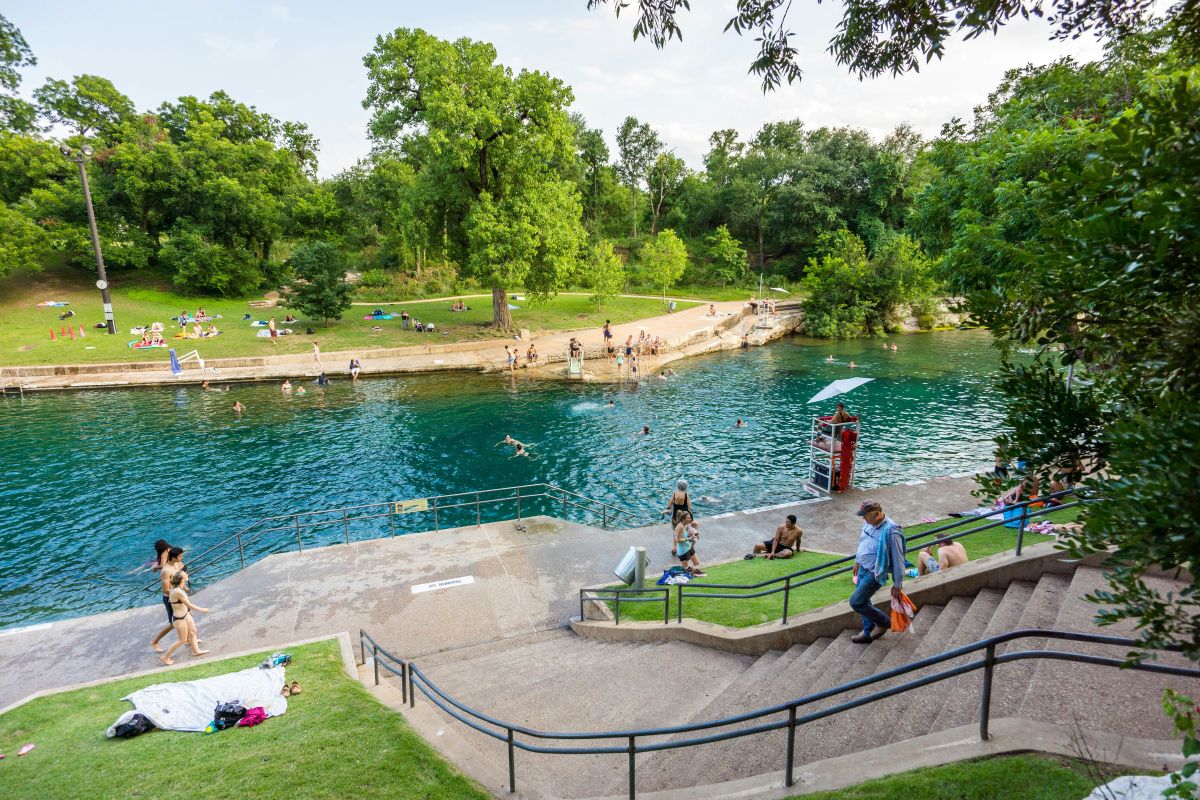
Many women report that Barton Springs Pool — Austin's legendary natural spring pool in Zilker Park — is one of the best spots for meeting locals in a relaxed, judgment-free environment. It's open year-round, costs $9–$10 to enter, and has a genuine neighborhood-pool social character that rewards lingering.
Practical Considerations
Austin operates on US Dollars (USD), and cash is accepted everywhere but increasingly optional — most bars, restaurants, food trucks, and shops accept contactless payment via Visa, Mastercard, and Apple/Google Pay. ATMs are widely available throughout the city, particularly on South Congress and in downtown; standard ATM fees run $3–$5 for out-of-network withdrawals.
Electricity in the United States runs on 120 volts at 60Hz, using Type A (two flat parallel pins) or Type B (two flat pins plus a round grounding pin) outlets. International visitors from Europe, Asia, Australia, or India will need a plug adapter and should check whether their devices support dual voltage (most modern laptops, phone chargers, and cameras do — check the label). Most hotels and hostels provide USB charging at bedsides, and café culture in Austin means accessible power outlets are common in most coworking-friendly cafés.
Wifi is fast and widely available in Austin — the city is a major tech hub, and reliable high-speed internet is standard in hotels, cafés, coworking spaces, and most restaurants. Many areas of the city have public wifi, including the Congress Avenue corridor.
Austin's weather demands practical preparation. Summers (June through August) are extreme — daily highs routinely hit 95–105°F (35–40°C) with high humidity. Lightweight, breathable clothing, sun protection (hat, SPF50+ sunscreen), and constant hydration are not optional. Spring (March–May) and fall (September–November) are the ideal travel windows, with temperatures in the 60s–80s°F (15–27°C). Winters are mild — January highs around 62°F (17°C) — but occasional cold fronts can drop temperatures sharply overnight, so pack a layer.
Dress culture in Austin is casual and expressive. "Keep Austin Weird" extends to fashion: you'll see everything from cowboy boots and sundresses to vintage band tees to tech-casual athleisure. Women visitors can dress as they like without attracting unwanted attention based on clothing choices. There is no cultural or religious dress code in effect; Austin is one of the more liberal cities in Texas on this front.
Accommodation
For solo female travelers, Austin offers accommodation options across every budget — from the iconic Firehouse Hostel to boutique South Congress hotels to full-service downtown properties.
The Firehouse Hostel at 605 Brazos Street in downtown Austin is the standout choice for budget travelers. Housed in a historic fire station built in 1885, it offers dedicated female-only dormitories (an 8-bed female dorm and a 4-bed Female Dorm Deluxe), key card access to all rooms, large under-bed lockers, and a no-outside-guests policy that creates genuine security. Beds start at approximately $26/night. The on-site speakeasy bar behind a bookcase in the lobby is a beloved Austin quirk and a natural social hub for solo travelers.
For mid-range stays, the South Congress Hotel at 1603 South Congress Avenue positions you in the heart of Austin's most walkable, female-friendly neighborhood, with a pool, multiple restaurants, and easy access to boutique shopping. Rooms start around $150–$200/night. The Hotel Magdalena and Hotel San Jose — both also on South Congress — offer boutique experiences with a strong sense of local character. The Heywood Hotel on East Cesar Chavez provides a design-led boutique option in East Austin with genuine community feeling.
For downtown convenience, the Aloft Austin Downtown has a central location, a rooftop bar, and good solo-traveler energy. CitizenM, which has an Austin location, delivers quality boutique rooms at reasonable price points.
Neighborhoods to prioritize for accommodation: South Congress for walkability and character; Hyde Park for quiet safety; Mueller for planned-community security; East Austin (East Cesar Chavez corridor) for dining proximity. Avoid East Riverside-Oltorf and Rundberg Lane as base neighborhoods — both have higher crime rates that make them uncomfortable for solo travelers, particularly at night.