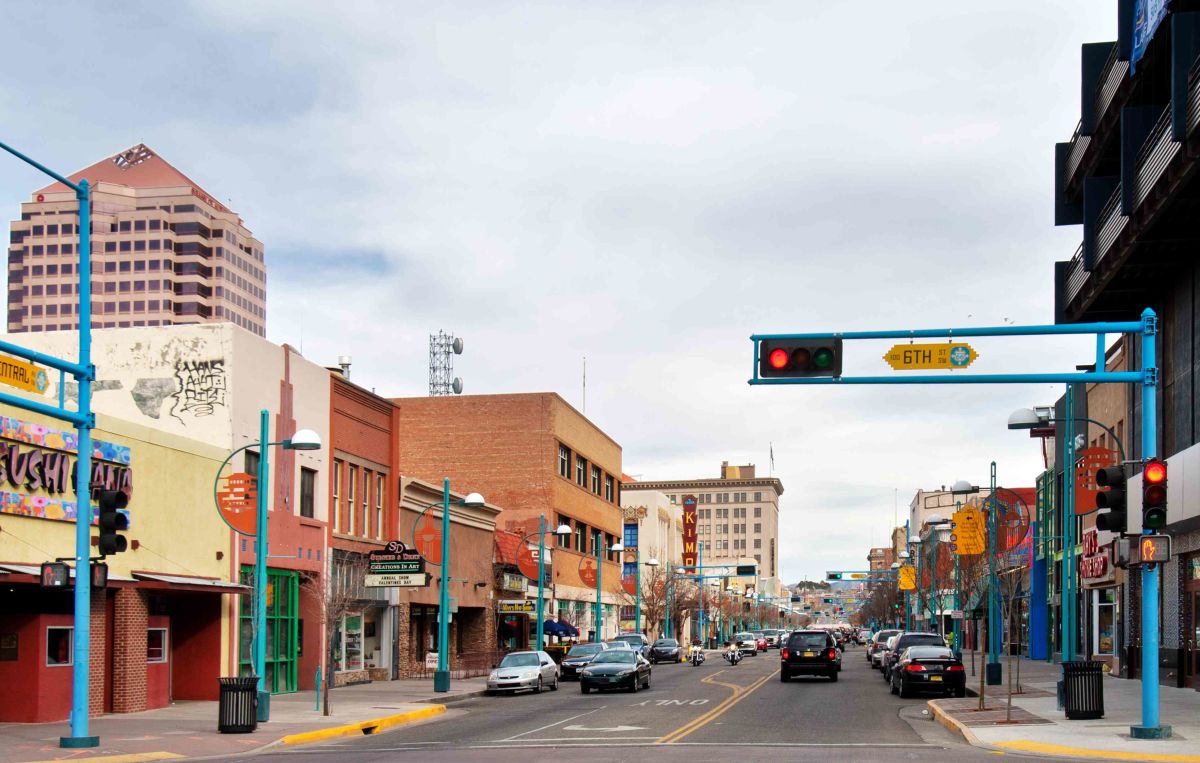
Downtown
albuquerque, united states
The historic heart of Albuquerque delivers an extraordinary mix of Pueblo Revival architecture, Route 66 nostalgia, and a growing arts scene, but solo female travelers should plan daytime exploration and evening rideshares carefully, as downtown's safety picture changes significantly after dark.
Stats
Key Safety Tips
Downtown Albuquerque is the cultural and historic heart of the city, and for solo female travelers who want to immerse themselves in the authentic fabric of the American Southwest, it delivers an experience that is hard to replicate anywhere else. Founded in 1706 by Spanish colonizers, this neighborhood is the oldest part of the city, and centuries of layered history are visible at every turn: Pueblo Revival adobe buildings stand next to Art Deco facades, and murals splashed across brick walls bring contemporary street art into conversation with deep indigenous traditions.
The neighborhood is divided into six distinct districts, each with its own character: the Courthouse District, the Warehouse District, the Plaza District, the Arts and Entertainment District, the Transportation Center District, and the primarily residential Casa District. This internal variety means that a solo traveler can move from a farmers' market buzzing with community energy to a quiet gallery in the span of a few blocks. Central Avenue, which is also the legendary Route 66, runs straight through downtown and anchors the neighborhood's commercial life.
Downtown is also undergoing an active revitalization. New restaurants, art spaces, and community events have multiplied in recent years, and the Albuquerque Artwalk, held on the first Friday of most months, draws a genuinely diverse and welcoming crowd. Many women find the daytime and early evening atmosphere in the core tourist areas comfortable and friendly. That said, this is a city with a higher-than-average crime rate, and the honest advice is that confidence and situational awareness are essential companions here, especially once the sun goes down.
Downtown Albuquerque is genuinely walkable during daylight hours. The blocks around Civic Plaza, the KiMo Theatre on Central Avenue, and the Old Town Plaza to the northwest are well-trafficked and feel reasonably safe for a solo woman walking at a confident pace. The grid layout is logical, and many of the key attractions are clustered within a comfortable 15 to 20 minute walking radius of the Albuquerque Convention Center on 2nd Street NW.
After dark, the picture shifts considerably. Multiple local sources and community forums are blunt: walking alone in Downtown Albuquerque at night carries real risk. Unhoused individuals are present throughout the neighborhood, and stretches of Central Avenue can feel unsettling after 9 PM. This seasoned traveler recommends relying on rideshare apps such as Uber or Lyft for any movement after dark rather than walking, even on short distances. If you do walk at night, stay on well-lit streets close to active bars and restaurants, avoid quiet side streets, and keep your phone out of sight.
During the day, stick to the core commercial and tourist blocks. The area around Gold Avenue and Tijeras Avenue near the civic buildings tends to have more foot traffic and a more settled atmosphere than the blocks immediately south of Central closer to the rail yards.
Most restaurants in Downtown Albuquerque open for lunch service around 11 AM and close their kitchens between 9 PM and 10 PM on weekdays. On weekends, many stay open until 10 PM or later, particularly those with full bar service. The Downtown Growers' Market, held at Robinson Park on Marble Avenue NW, typically runs on Saturday mornings from 7 AM to noon during the growing season, roughly April through October.
The KiMo Theatre box office and gallery spaces tend to open from late morning through the evening on event days; check the city calendar at cabq.gov for specific showtimes. Galleries in the Arts and Entertainment District often participate in the monthly Artwalk on the first Friday of the month, staying open until around 9 PM or 10 PM on those evenings. Coffee shops and casual cafes typically open by 7 AM and close by 3 PM to 5 PM. The 505 Central Food Hall on Central Avenue offers extended hours with multiple vendors, making it a reliable option for flexible solo dining.
Bars and nightlife venues in the area generally open in the early evening and close at 2 AM, which is the New Mexico state last-call time.
Downtown Albuquerque is an excellent neighborhood for solo dining, with a range of options that cover New Mexican classics, international cuisine, and fast-casual food hall fare. Monroe's Restaurant is a local institution for authentic New Mexican cuisine: enchiladas, sopapillas, chile rellenos, and Indian tacos are all on the menu, and the welcoming staff and communal vibe make it comfortable for someone eating alone.
Slate Street Cafe on Slate Avenue NW is a perennial favorite for contemporary comfort food, serving dishes such as green chile chicken stew and grilled ahi tuna alongside a well-curated wine list in their Wine Loft. The atmosphere is relaxed enough for a solo lunch and polished enough for a solo dinner. Le Troquet brings French bistro classics to a corner setting in downtown and is particularly appealing for weekend brunch.
For quick, approachable eating, the 505 Central Food Hall on Central Avenue assembles multiple vendors under one roof and is ideal if you want variety without committing to a single restaurant. Tucanos Brazilian Grill on Central provides a lively, interactive dining experience with rotating skewers of grilled meats, which can feel festive even when dining alone. The Grove Cafe and Market, a short distance from the core downtown blocks, is consistently praised for its brunch and fresh, locally sourced dishes, and draws a friendly, community-oriented crowd.
Haggling is not a cultural norm in Downtown Albuquerque's restaurants, bars, or standard retail shops. Prices are set and displayed, and attempting to negotiate in a restaurant or modern boutique would be out of place. Fixed pricing is the universal expectation in the neighborhood's Arts and Entertainment District galleries and food venues as well.
The one context where light negotiation may be appropriate is in the Old Town Plaza area at the edge of downtown, where independent vendors selling Native American jewelry, pottery, and Southwestern crafts sometimes have flexibility on price, particularly toward the end of the market day. Even here, the approach should be gentle and respectful: asking about the best price is acceptable, but aggressive bargaining is culturally inappropriate and will be met with a firm refusal. Most vendors set prices that reflect genuine craftsmanship, and paying the asking price is a straightforward way to support Indigenous and local artisans.
Downtown Albuquerque is fortunate to have a major hospital within the neighborhood itself. Presbyterian Hospital, located directly in downtown at 1100 Central Avenue SE, is New Mexico's largest acute care hospital and operates a 24-hour emergency room. For any medical emergency while staying in or around downtown, Presbyterian should be your first port of call, and it is reachable by rideshare within minutes from the central blocks.
UNM Hospital, operated by the University of New Mexico Health Sciences Center and located at 2211 Lomas Boulevard NE, is a short drive or rideshare trip from downtown and serves as the region's academic medical center handling the most complex emergency cases. For non-emergency care, urgent care clinics are available throughout the greater downtown area. It is worth noting that UNM Health is the state's only academic medical center, so the quality of specialist care available in Albuquerque is high relative to the region.
Keep the general emergency number, 911, easily accessible, and note the non-emergency police line for Albuquerque is 505-242-COPS (2677) if you need to report a concern that does not require an immediate response.
Tap water in Albuquerque is treated, tested, and considered safe to drink by the city's Water Utility Authority. The water comes from a combination of the Rio Grande surface water and groundwater aquifers, and Albuquerque has historically had a strong track record with its water treatment program. Downtown hotels and restaurants serve tap water routinely, and there is no reason to default to bottled water on safety grounds.
That said, some visitors find the taste of Albuquerque's tap water slightly minerally due to the local source chemistry. If you are sensitive to taste, a filtered water bottle is a practical and eco-friendly choice for your stay. Water fountains in civic spaces such as Civic Plaza are generally operational and safe to use during the warmer months. Staying well-hydrated is especially important in Albuquerque's high-altitude, low-humidity desert climate, where dehydration can sneak up on travelers who are not used to the environment.
New Mexico regulates alcohol sales through the Alcoholic Beverage Control (ABC) Division. Bars and restaurants in Downtown Albuquerque are permitted to serve alcohol until 2 AM, after which service must stop. Most venues in the downtown nightlife corridor adhere to this closing time strictly.
The legal drinking age in New Mexico is 21, and ID will be checked at the door of virtually every bar and nightlife venue in the downtown area, regardless of your apparent age. Public consumption of alcohol outside of licensed premises is not permitted, so drinking on sidewalks or in parks is not legal. Alcohol can be purchased in grocery stores and convenience stores during permitted hours; liquor stores in the downtown area generally operate from around 9 AM to midnight, though hours vary by establishment.
For women navigating the downtown nightlife scene, the practical advice is to keep your drink in hand at all times in bars and clubs, never leave a drink unattended, and decline drinks offered by strangers unless you watch the bartender pour them. The nightlife culture in downtown is generally friendly, but standard drink safety practices apply as they would in any city.
Albuquerque has a genuinely warm social culture shaped by its blend of Anglo-American, Hispanic, and Indigenous New Mexican traditions. In everyday settings in Downtown, the standard greeting is a smile and a hello, or a handshake in more formal or professional contexts. In casual encounters, such as at a food hall, a cafe, or a gallery opening, friendly conversation tends to flow easily, and solo travelers are rarely made to feel out of place.
The Hispanic cultural influence in Albuquerque means that a warm, personable tone is appreciated. If you speak any Spanish, even a basic greeting such as hola or gracias in a locally owned restaurant or market is warmly received. First-person eye contact and a confident, open posture signal comfort and approachability in the neighborhood's social spaces.
At cultural events, galleries, and the monthly Artwalk, attendees are typically open to conversation with strangers, making these some of the most accessible environments for a solo female traveler to make genuine connections. The community around the Downtown Growers' Market on Saturday mornings also has a notably neighborly, welcoming feel.
In Downtown Albuquerque, punctuality expectations mirror those of most mid-sized American cities. Business appointments, tours, and ticketed events are expected to begin on time, and arriving a few minutes early is considered courteous. For the KiMo Theatre and Civic Plaza events, doors often open 30 minutes before showtime, and latecomers may have limited seating options for popular shows.
In social settings, a relaxed attitude toward timing is more common. Meeting a new friend for coffee or joining a casual gallery opening does not require precision timing, and arriving 10 to 15 minutes after the stated start of a social event is entirely normal. The Saturday morning Downtown Growers' Market is busiest early: arriving by 8 AM gives you the best selection of produce and the most energetic atmosphere before the crowds thin out by midmorning.
Restaurant reservations should be taken seriously, particularly at popular spots on weekends. Downtown Albuquerque's better restaurants fill up on Friday and Saturday evenings, and a reservation time is expected to be honored within a reasonable window.
Downtown Albuquerque offers some genuinely good opportunities for solo female travelers to connect with locals and fellow visitors. The monthly Albuquerque Artwalk on the first Friday of the month is probably the single best event for meeting people organically: the route winds through galleries and local businesses, the crowd is diverse and convivial, and the format naturally encourages conversation with strangers.
The Downtown Growers' Market on Saturday mornings at Robinson Park on Marble Avenue NW draws a community-minded crowd of locals who are generally happy to chat about the city and recommend their favorite spots. Civic Plaza events, which range from outdoor concerts to festivals with up to 20,000 attendees, also provide a lively environment where solo attendance feels entirely comfortable.
Coffee shops around the 505 Central area and the downtown core attract a mix of remote workers, students, and locals, and a laptop-friendly cafe is a natural setting for low-pressure social interaction. The Albuquerque Press Club in the downtown area offers a more convivial setting with a balcony overlooking the city, though it operates as a members and guests space, so access requires a member connection.